Meridian, Idaho
Water softeners and whole-home treatment in Meridian, Idaho
Meridian's city water comes from deep wells, and the city's 2025 numbers put it between moderately hard and very hard, depending on your zone. We test city and Veolia water at your home for free, set up a certified lab test for private wells and match a system to your home.
- City water source
- 25 wells, 400 to 800 feet deep
- City hardness, 2025
- 6.97 to 10.53 gpg by zone
- Water providers
- City of Meridian, Veolia, private wells
- Local test average
- About 8 gpg (hard)
Where Meridian's tap water comes from
The City of Meridian runs on groundwater alone. It pumps from 25 wells, 400 to 800 feet deep, and serves more than 48,500 customers.
The city adds chlorine to keep the water safe in the pipes. Some wells also run through filters that take out natural iron and manganese, with eight treatment sites done and four more planned by 2030.
Veolia, a private water company, also serves part of Meridian with well and Boise River water. Your water bill shows which provider you have. Some homes on the rural edges of town use a private well.
Meridian hardness by zone
The city tests hardness in each of its five water zones and points anyone installing a softener to this chart. Here are its 2025 numbers on the USGS scale.
| Zone | Grains per gallon | mg/L | USGS scale |
|---|---|---|---|
| Zone 1 | 10.53 | 180 | Very hard |
| Zone 2 | 8.87 | 151.71 | Hard |
| Zone 3 | 9.41 | 160.83 | Hard |
| Zone 4 | 6.97 | 119.20 | Moderately hard |
| Zone 5 | 10.16 | 173.67 | Hard |
| City average | 9.19 | 157.08 | Hard |
Source: City of Meridian 2025 Water Quality Report, which includes a zone map. Veolia water and private wells will differ. On city or Veolia water, our free in-home test measures your own tap.
Local water data
What local water tests show in Meridian
The city's chart covers its own water. Average readings from local water tests in Meridian come in at about 8 gpg of hardness, which is hard on the USGS scale and in line with the city's numbers. Total dissolved solids (TDS), a measure of everything dissolved in the water, average about 220 ppm.
The same tests show a pattern by area. Uranium and arsenic show up in Meridian readings, and nitrate tends to run higher in west Meridian.
These are area averages, so your home can differ. A reverse osmosis system reduces arsenic, nitrate and other dissolved solids at the kitchen tap, and your own test shows whether you need one.
Meridian area averages
- Hardness
- About 8 gpg (hard)
- Total dissolved solids
- About 220 ppm
- Shows up in readings
- Uranium and arsenic
- West Meridian
- Nitrate tends to run higher
- Source
- Average readings from local water tests
Brown water now and then
The city traces it to natural iron and manganese. Chlorine turns them into rust-colored bits that settle in the mains until flushing or construction stirs them up. The city says the water is safe to drink.
Newer homes
Protect a new water heater from the start
A new water heater starts out clean. Hard water leaves scale in the tank, and a softener installed early cuts down on that build-up.
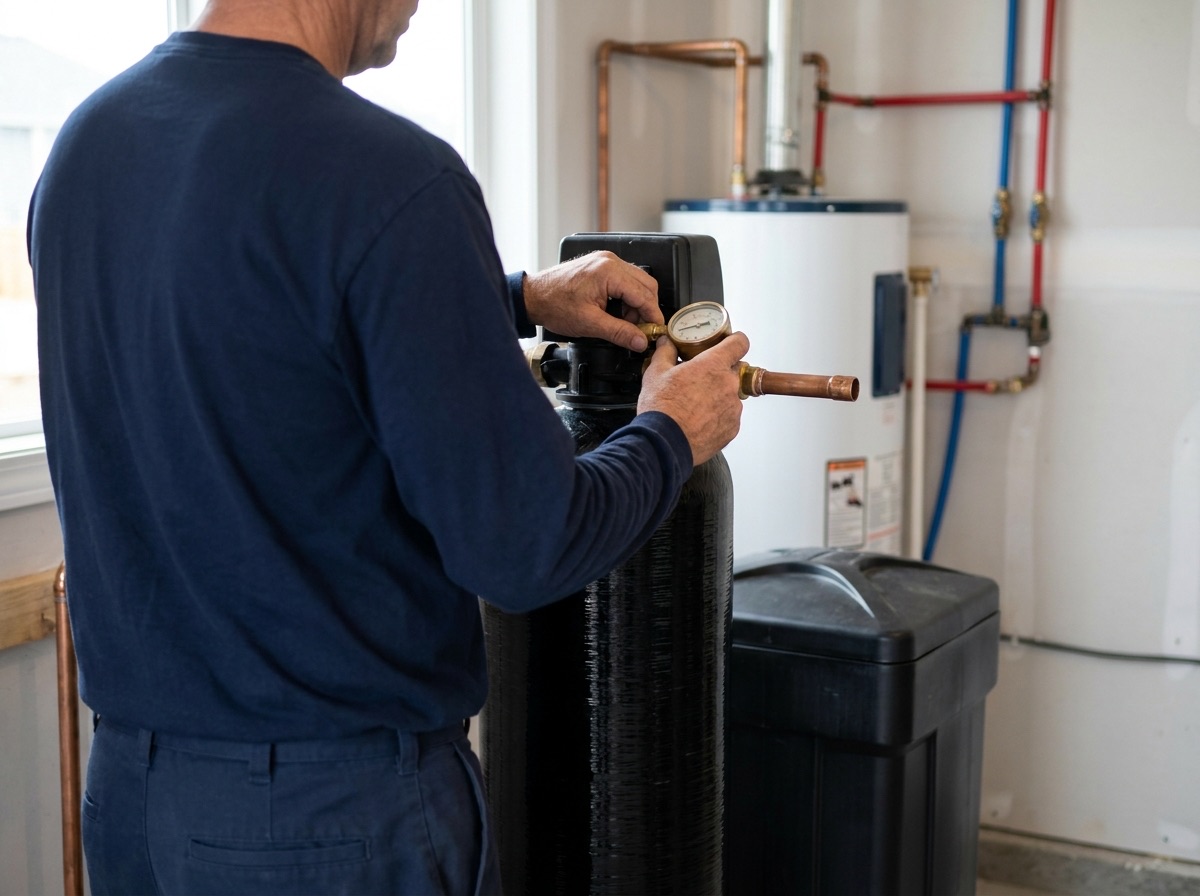
Many newer homes in the valley were built with a softener loop already plumbed in, usually in the garage. It makes the install simpler, and we'll look for it during your test.
Every install includes a whole-home plumbing check. The city says pressure runs 50 to 80 psi across town, so we check yours too.
Options for city water
What fits Meridian city water
Water softener
For hard water in any zone. Less scale in the water heater, fewer spots on glass and better soap lather.
Water softenersWhole-home filtration
Meridian's chlorine averaged 1.25 mg/L in 2025, under the 4 mg/L limit. If you notice the taste or smell, filtration reduces it at every tap.
Whole-home filtrationReverse osmosis
One kitchen tap that reduces dissolved solids, nitrate, fluoride and other contaminants.
Drinking water systemsPrivate wells around Meridian
In Idaho, a private well is the owner's to test. In what state water officials call the West Ada Area of Groundwater Concern, new home wells are generally limited to 200 feet deep, far shallower than city wells. A state review noted nitrate in the shallow aquifer here, and the city says parts of the aquifer carry natural uranium or farm chemicals. See well water treatment.
Every year, per Central District Health
- Bacteria
- Nitrate
Also worth checking
- Hardness
- Iron and manganese
- Arsenic and uranium
- Rotten-egg (sulfur) smell
Serving Meridian from nearby Star
We're based in Star and work all over Meridian, on city water, Veolia water and private wells. We also cover the rest of the valley, from Boise west to Fruitland.
Questions we hear in Meridian
Where can I read my Meridian water quality report?
City customers can find it on the city's water quality reports page, posted each June for the year before. Veolia customers can look theirs up by ZIP code on Veolia's Idaho site. Your water bill shows which one you have.
My zone is just under 7 gpg. Do I still need a softener?
Zone 4 averaged 6.97 gpg in 2025, which is moderately hard, so a softener is more of a choice there. If spots and scale bother you, it still helps.
Does Meridian add fluoride to its water?
No. The city says any fluoride in its water is natural and under 1 mg/L. A reverse osmosis system reduces it at the kitchen tap if you'd like less.
I'm on a private well near Meridian. Is the test free?
The free in-home test is for city water. For a well, we set up a certified lab test based on what you want checked, such as arsenic, uranium or nitrate. There's a lab fee, results take about a week, and then we design a system around the lab report.
Get your Meridian water tested
We'll test your city water at home for free, explain the results in plain words and give you a written quote. On a well, we start with a certified lab test. There's no pressure to buy.