Salt refills
Water softener salt, made easy, in the Treasure Valley
Our systems use salt sparingly, so most homes only add salt every 4 to 6 months. If you'd rather not deal with it, text us and we'll have someone swing by to top it off.
- How often
- Every 4 to 6 months for most homes
- Salt options
- Pellets or potassium
- Need a hand
- Text us and we'll swing by
Why your softener needs salt
A softener traps calcium and magnesium on resin beads. Every so often it rinses them off with salty water called brine. That rinse is called regeneration.
The salt in your brine tank makes the brine. When the salt runs out, the resin never gets cleaned, and hard water slowly comes back. Most people notice when spots return on the dishes.
Built to save salt
Why our systems use so little salt
Our softeners track how much water your home uses and regenerate only when the resin is close to full. Each cycle makes just enough brine for that cycle, and the brine flows up through the resin from the bottom, which cleans the beads well with less salt.
We also match the settings to your water test at the install and at each annual service. That is why most homes only add salt every 4 to 6 months. Very hard water or a big household can need it a bit sooner.
What sets your salt use
- Your hardness
- Harder water uses more salt
- Your household
- More people use more water
- Most homes
- Add salt every 4 to 6 months
What goes in the tank
Salt or potassium
Softener salt pellets
Sodium chloride pellets made for softeners. They cost the least, dissolve evenly and leave little residue in the tank.
Potassium chloride
A softener adds a small amount of sodium. If you're on a low-sodium diet, use potassium or drink reverse osmosis water. Potassium costs more and needs a settings change, which we handle.
How to check your salt level
Lift the lid on the brine tank about once a month. On most systems it's the shorter, wider tank beside the tall resin tank.
- Keep the salt level above the water line in the tank.
- Standing water above the salt means it's time to add salt or text us.
- If the level never seems to drop, check for a salt bridge.
- Leave a few inches of room at the top. A tank packed to the brim is more likely to bridge.
Salt bridges
Salt bridges, explained
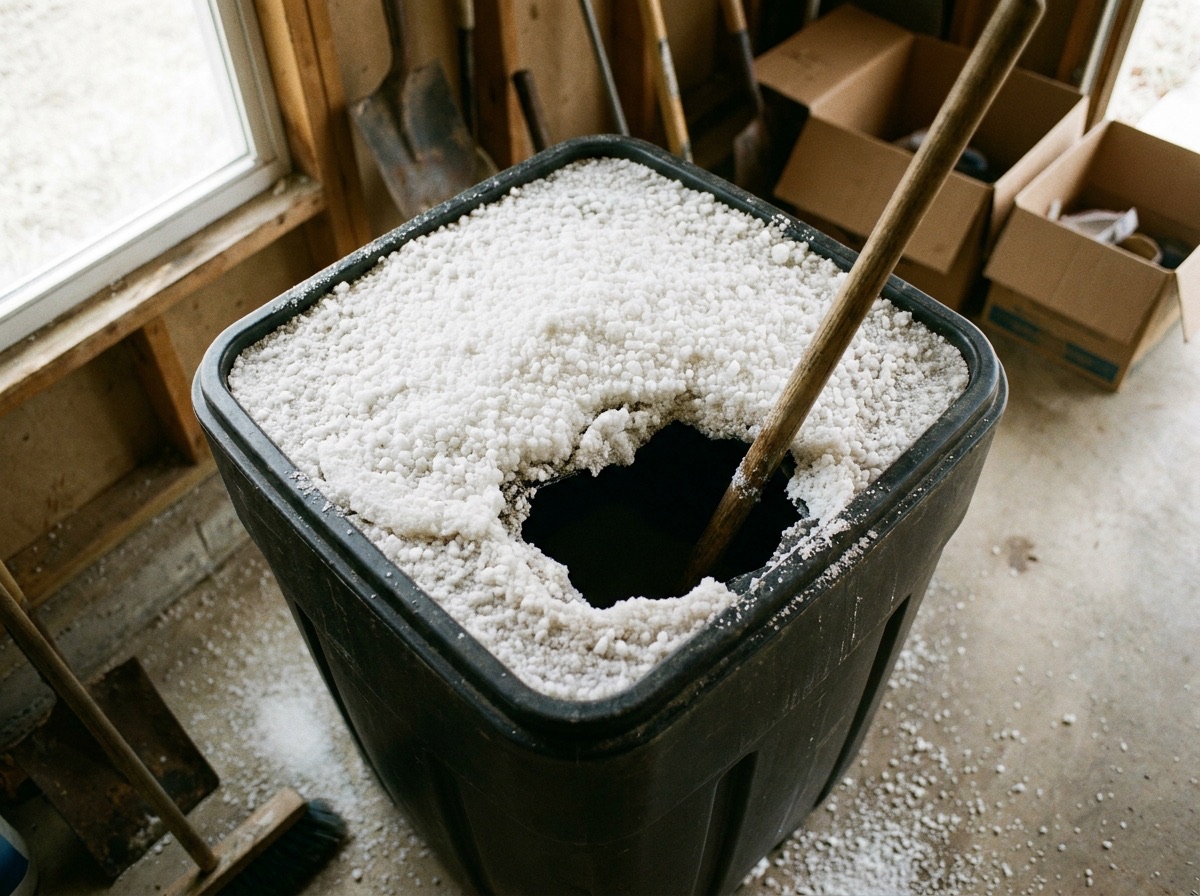
A salt bridge is a hard crust across the brine tank with an empty pocket underneath. From the top, the tank looks full, but the softener can't make brine through the crust.
Bridges form more often in garages, where heat and humidity swing with the seasons, and in tanks packed too full. Push gently on the salt with a broom handle. If it gives way, break it into chunks, or text us and we'll help.
What to watch for
Spots coming back on dishes and shower glass, or soap that won't lather, usually means the salt ran out or bridged. If there's water on the floor, put the softener in bypass and call us at (208) 860-4239.
If you'd rather not deal with salt, text us
If you'd rather skip the heavy bags, a quick text is all it takes.
Text (208) 860-4239
Send your name, your address and whether you use salt or potassium.
We tell you the cost
We text back with the cost and a time that works for you.
We swing by and top it off
Someone fills your brine tank to the right level and checks for a salt bridge while they're there.
Salt questions
How often do I need to add salt?
Most homes with our systems add salt every 4 to 6 months. Very hard water, a big household or an older softener can need it sooner.
Should I use salt or potassium?
Most people use salt pellets. They cost less and work well. Potassium is an option on a low-sodium diet. If you switch, let the tank run low first and we'll change the settings.
What is a salt bridge?
A crust of salt across the brine tank with an empty space under it. The tank looks full, but hard water comes back. Break it up gently with a broom handle, or text us.
Can someone fill it for me?
Yes. Text us at (208) 860-4239. We'll tell you the cost when you text, then someone will swing by and top off your brine tank.
What if I'm new and don't have a softener yet?
Start with a free water test. We test your city water at your home, explain the results and give you a written quote. On a well, we set up a lab test first.
Text us when you want a salt refill
When your salt is low and you'd rather not do it, send us a text and we'll swing by. If you don't have a softener yet, start with a free water test.